Work 15 / 18
Testing cheap shortcuts before an expensive training run
Before committing to an expensive training programme, I tested whether cheaper routes could do the job. I wrote down the pass marks first. The best route found 78% of objects on 25 datasets it had never seen, and passed none of its six gates.
- Gates passed
- 0 of 6
- Pass marks fixed before each run
- Recall on unseen datasets
- 78.4%
- Gate was 98%; interval 68.8–87.2
- Speed
- 0.21 s per image
- RTX 3090
- Sealed test
- 25 datasets
- 49 images, 1,649 objects
The setup
Each route had a gate fixed before I ran it. Datasets were held out whole, so nothing in the test set came from a dataset seen in training, and the final test set stayed sealed until the end: 25 datasets, 49 images, 1,649 objects.
What failed
| Route | Needed | Got |
|---|---|---|
| ShuffleNetV2 features + ridge classifier | macro F1 ≥ 0.90 | 0.711 |
| DINOv3 ViT-S descriptors | ≥ 0.90 | 0.691 |
| OWLv2 region classifier | ≥ 0.90 | 0.662 |
| SAM2 box-to-mask | mean IoU ≥ 0.80 | 0.563 |
Frozen DINOv3 and OWLv2 descriptors both lost to a 1.4 MB ShuffleNetV2.
What survived
A class-agnostic FCOS box proposer. On the sealed set it recalls 78.4% of objects at 1,024 proposals per image (95% interval 68.8 to 87.2), in 0.21 seconds per image on an RTX 3090. The gate was 98%. A second training run reproduced all four losses and the checkpoint hash exactly.
The six gates
| Gate | Needed | Got |
|---|---|---|
| Proposal recall | ≥ 98% | 78.41% |
| Recall on tiny objects | ≥ 95% | 68.04% |
| Semantic macro F1 | ≥ 0.90 | 0.7093 |
| Mask mean IoU | ≥ 0.80 | 0.5633 |
| Field-held-out evidence | required | none |
| Precision evidence | exhaustive | not exhaustive |
Where it works
It is strong on garlic, corn, sunflower heads, maize tassels and trees. It found 0% of the objects in the blueberry and cabbage-trunk sets and 10% in one weed-control set.
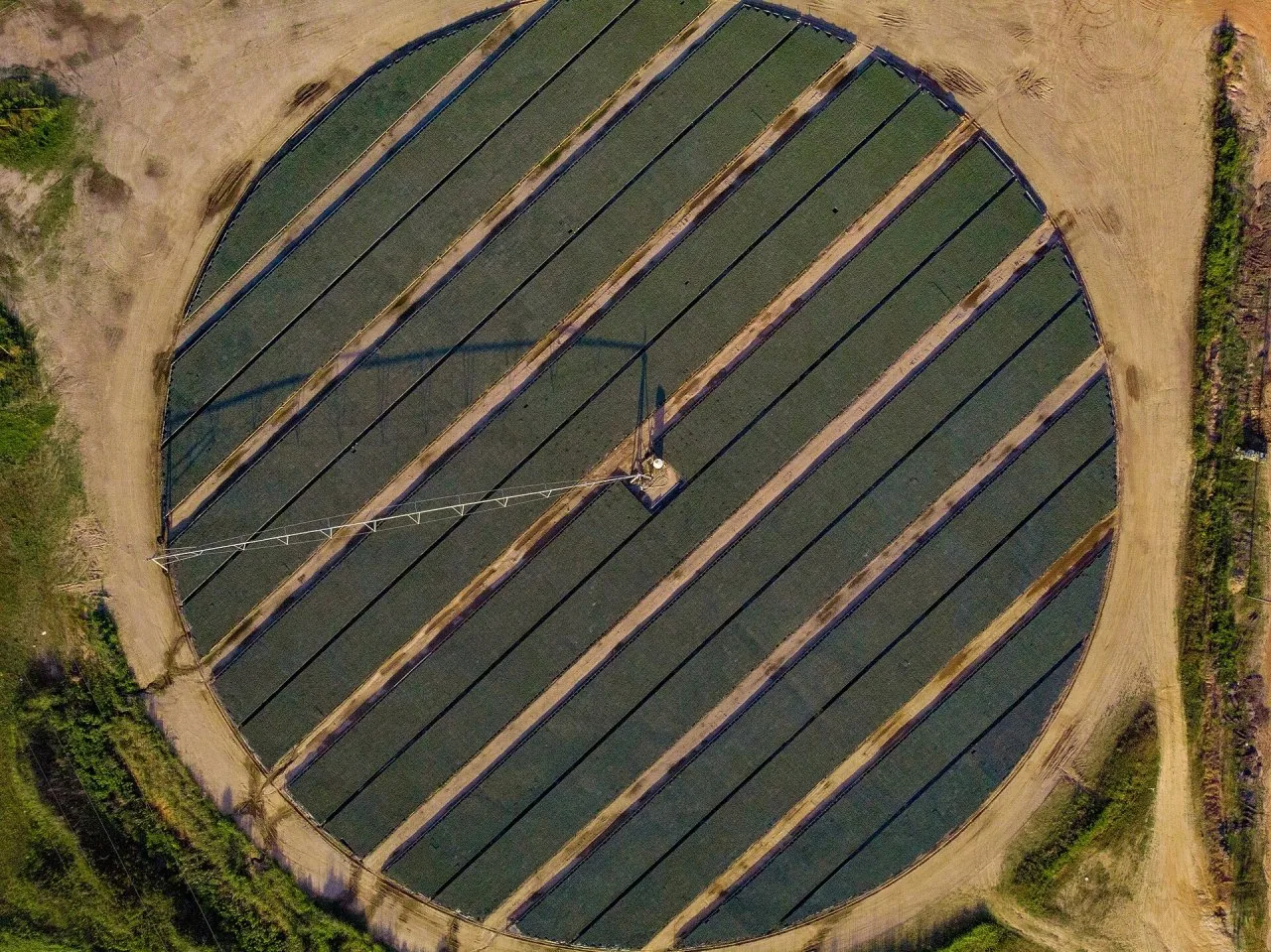
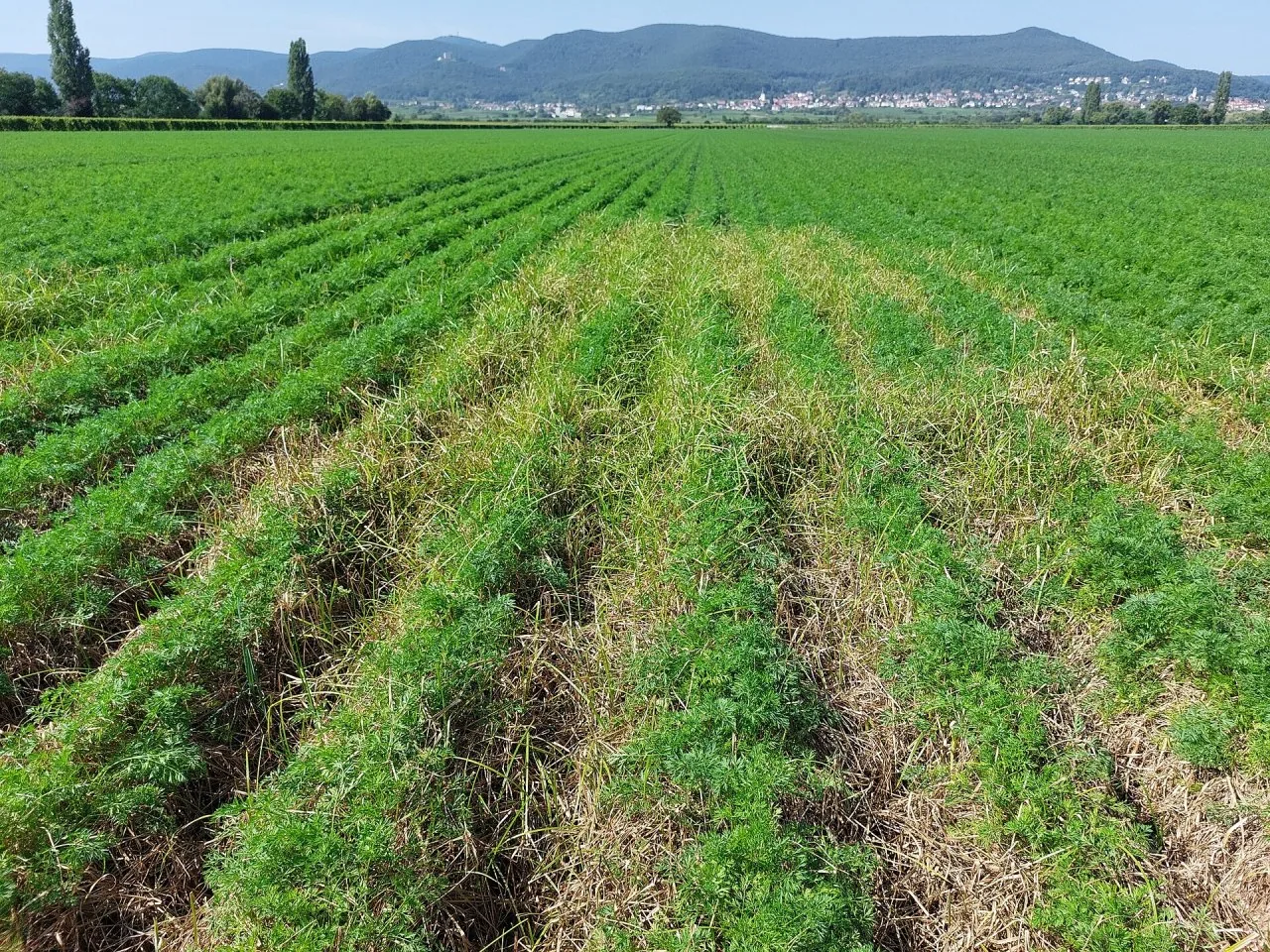
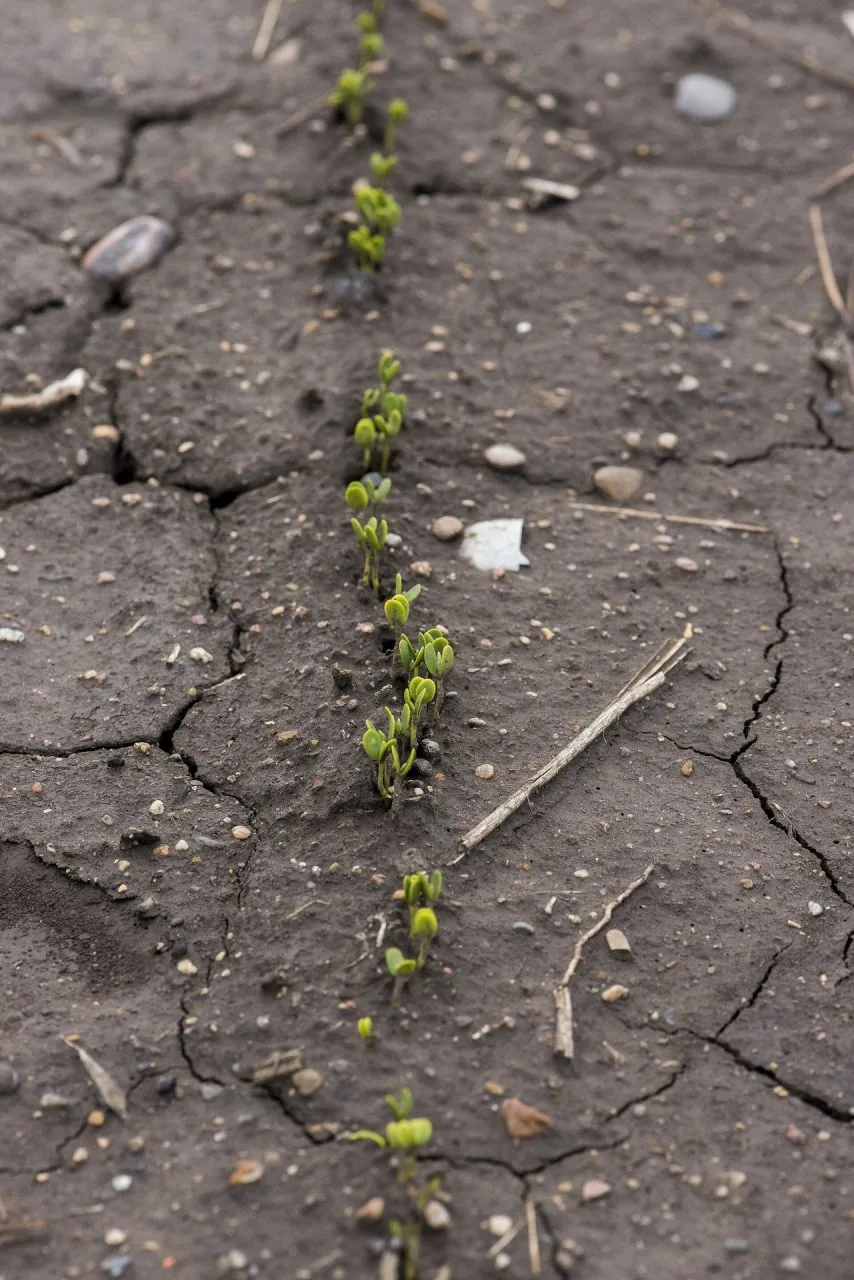
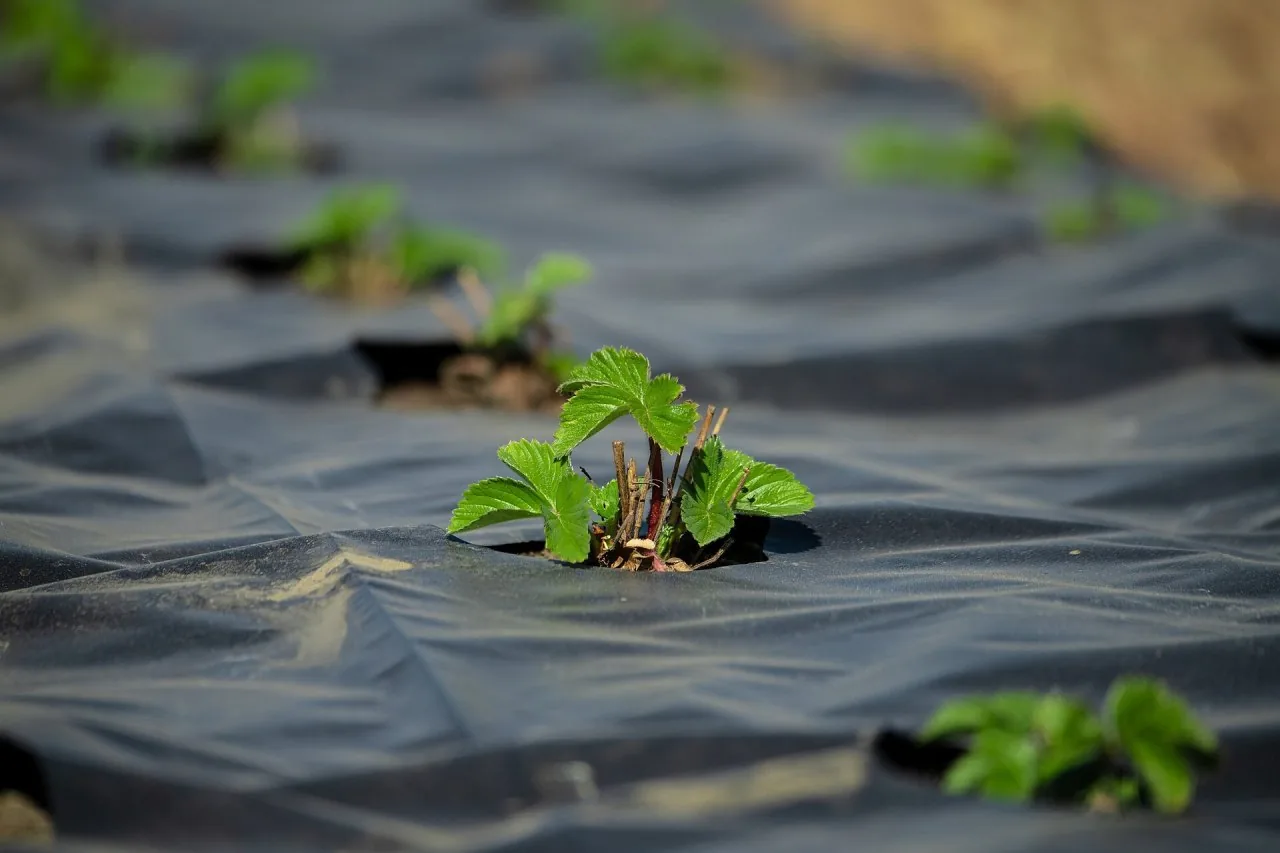
Photos: Lewis Taylor Farms seven months after Hurric… by USDAgov, Public domain; Erdmandelgras (Cyperus esculentus) in Möhren… by Schlaghecken Josef, CC BY 4.0; Bismarck Plant Materials Center - North Dako… by USDAgov, Public domain; FARMERS GOV - Huerta del Valle - Community G… by USDAgov, Public domain. What I changed.


What it was for
The result is a map of which cheap components fail and by how much, and a smaller next step with evidence behind it. The model itself runs in shadow mode only.
From the run log
pd.01ShuffleNetV2 features with a ridge classifierMacro F1 0.7112 (gate 0.90)Killed
Setup: Frozen features, ridge classifier
The cheapest route. It missed the gate by 0.19, and it was still the best of the three descriptor routes.
pd.04SAM2 box to maskMean IoU 0.5633 (gate 0.80)Killed
Setup: SAM2 prompted with boxes
Turning proposal boxes into masks with SAM2 reached a mean IoU of 0.5633 against a gate of 0.80.
pd.05Choosing the proposerFCOS R50-FPN at 4 epochs: 63.3%Finding
Setup: Calibration recall for five candidates
MobileNetV3 Faster R-CNN 57.0%, ResNet50 Faster R-CNN 62.0%, FCOS at 4 epochs 63.3%, FCOS at 12 epochs 60.2%, a SAM2 grid 59.4% at 14.9 seconds per image. I selected the 4-epoch FCOS and evaluated it on the sealed set once.
pd.06Sealed evaluationRecall 78.41% (gate 98%)Not shipped
Setup: 25 held-out datasets, 49 images, 1,649 objects, 1,024 proposals per image
The 95% interval is 68.81 to 87.24%. Recall on tiny objects was 68.04%. It passed 0 of 6 production gates, so it is packaged for shadow use only. A second training run reproduced the losses and the checkpoint hash exactly.
Tools
FCOS R50-FPN, ShuffleNetV2, DINOv3, OWLv2, SAM2, PyTorch.
The full write-up
There is a longer write-up of this project. It has client details in it, so email me if you’d like a redacted copy.